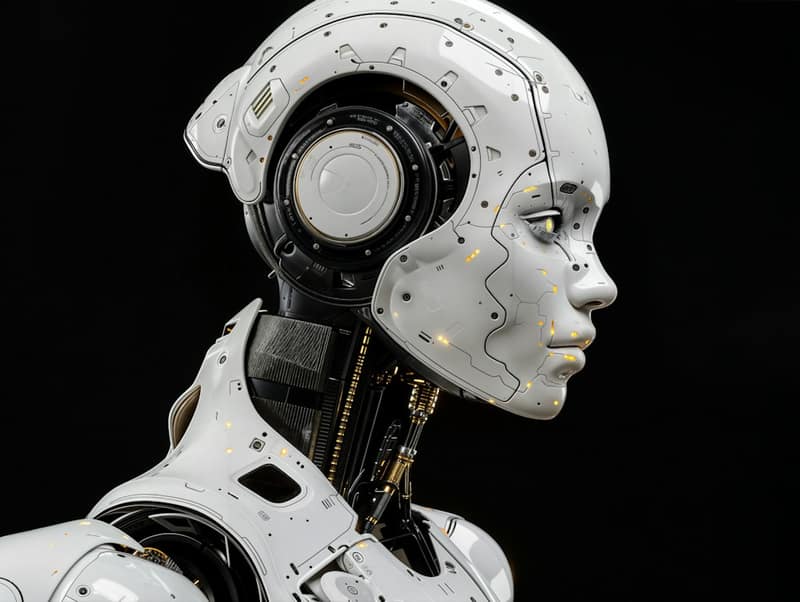
Generative AI is a type of artificial intelligence that produces new content, such as text, images, audio, video or computer code, in response to a prompt. It does this by learning patterns from very large collections of examples and then generating new output that fits those patterns.
It is a tool for producing drafts and ideas quickly. It is not a source of guaranteed truth, and understanding that distinction is the key to using it well.
Key takeaways
- Generative AI creates content by predicting what is likely to come next, based on learned patterns.
- It is useful for drafting, summarizing, brainstorming, translating and coding help.
- It can produce confident but wrong answers, so check important facts.
- Good prompts and human review improve results.
How it works, in simple terms
Many text-generating systems are built on large language models. During training, a model is shown vast amounts of text and learns statistical relationships between words and ideas. When you give it a prompt, it generates a response one piece at a time, each time choosing a likely continuation given what came before.
Image and audio generators work on a similar principle with different kinds of data. The result can look remarkably original, yet the system is combining learned patterns, not recalling a single stored answer or understanding the subject as a person does.
What it is good at
- Drafting. First versions of emails, outlines, reports and marketing copy.
- Summarizing. Condensing long documents into key points.
- Transforming. Rewriting for a different tone, translating or reformatting.
- Brainstorming. Generating options, names and angles to react to.
- Coding support. Suggesting snippets, explaining code and spotting simple errors.
Used this way, it can save time on routine work and help people get past a blank page.
Where it falls short
Generative systems can state incorrect information fluently, a behavior often called hallucination. They may reflect biases present in their training data, and they can struggle with up-to-date facts unless connected to current sources. They also do not know what you have not told them, and may miss context that is obvious to a colleague.
For anything important, treat the output as a draft: verify facts, check numbers and apply your own judgment. Where AI-generated writing is published, a human should be accountable for it, a principle that matters in content marketing that earns trust.
Getting better results
Be specific about the task, audience, format and tone. Give relevant background and examples of what good looks like. Ask the system to show its reasoning or sources where appropriate, then check them. Iterate: refine the prompt and edit the output, rather than expecting perfection first time.
Using it responsibly
Think about what information you share with a tool, how its output will be used and who is affected. Policies on privacy, intellectual property and review are worth setting up early, as covered in using AI responsibly in your business. When generative models are given tools and goals, they begin to act as the systems described in AI agents explained.
Common mistakes to avoid
- Treating output as fact. Check anything that matters.
- Sharing sensitive data carelessly. Know how a tool handles the information you enter.
- Using one vague prompt and giving up. Better instructions and iteration often improve results considerably.
- Passing off AI drafts as finished work. Human review adds accuracy, judgment and voice.
An illustrative example
Imagine a marketing manager who needs a first draft of a product announcement. She gives a generative tool the audience, the key points and the tone, and asks for three headline options and a short draft. She picks one headline, rewrites the opening in her own voice, checks every claim against the product team’s notes and removes a sentence that sounds generic. The tool saved time on the blank page. The judgment, accuracy and final wording remained hers.
Frequently asked questions
Is generative AI the same as artificial intelligence?
It is one branch of AI focused on creating content. AI also includes other approaches, such as systems that classify, predict or recommend.
Can generative AI think?
It produces outputs that can look like reasoning, but it works by pattern prediction. Whether that amounts to understanding is debated, and practical caution is wise.
Is the output free to use commercially?
The rules depend on the tool and on the law where you operate. Check the terms of the service and seek advice for important uses.